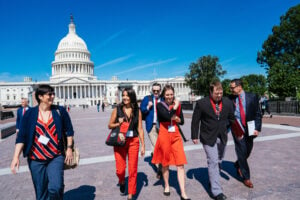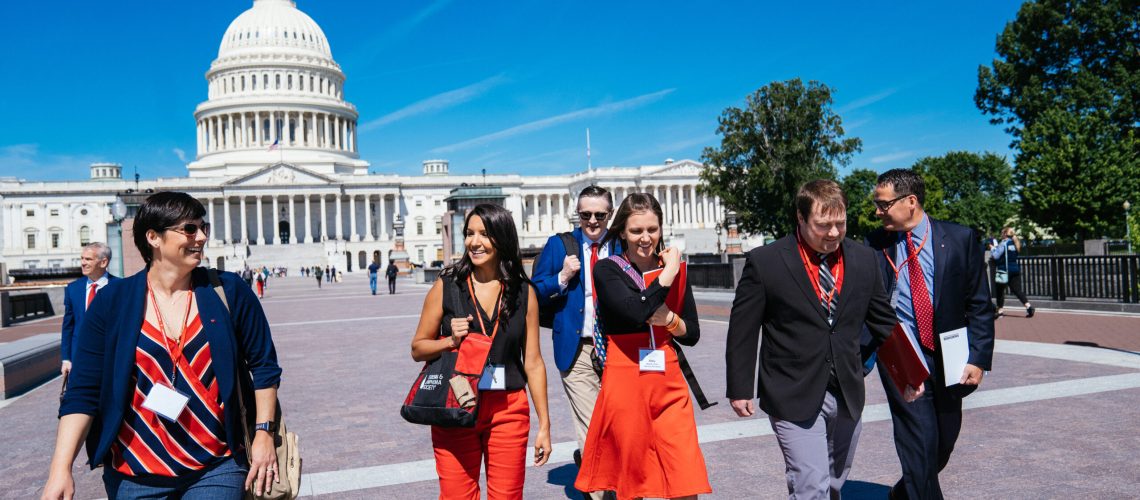
We’ve covered the Leukemia & Lymphoma Society’s Capitol Hill Lobby Day every year since our first one. A few real lessons from that work apply to any organization planning a Hill advocacy day, not just LLS.
Table of Contents
The real content happens between meetings, not during them
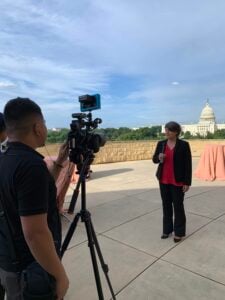
The most usable footage from a Hill day rarely comes from inside the actual lawmaker meeting, those are often brief, formal, and not built for camera access, a reality anyone who has read up on how congressional scheduling actually works will recognize. The real material shows up in the hallway afterward, the quick reaction, the moment someone processes how a meeting went. Planning around those windows matters more than planning around the meetings themselves.
A Capitol Hill Lobby Day covers a whole year of content, if you plan for it
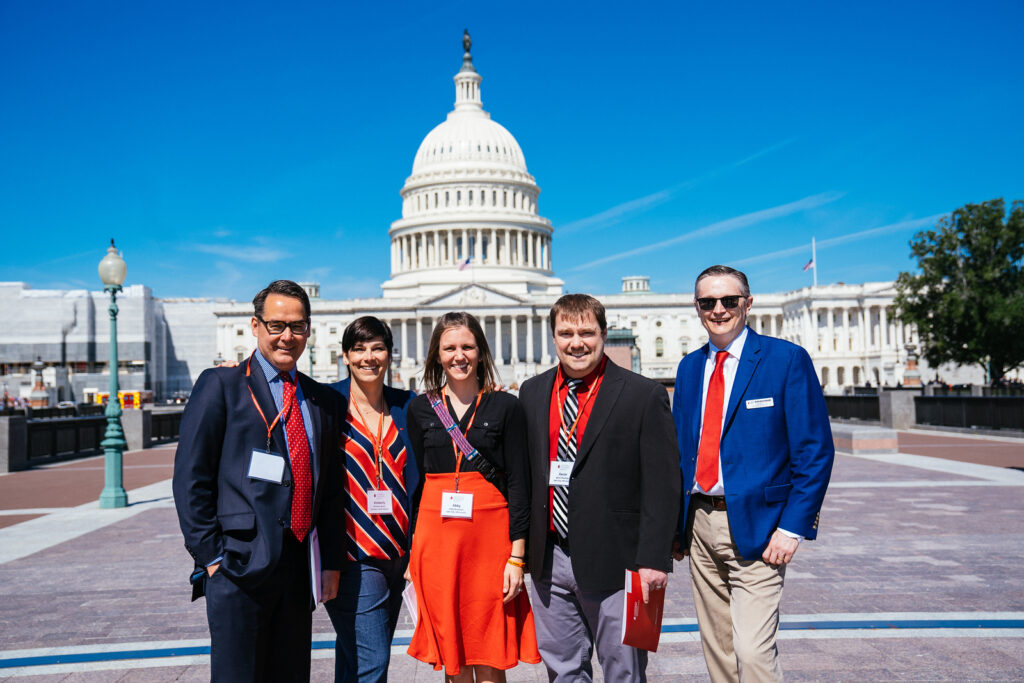
Our full case study on LLS’s Lobby Day covers this in more depth, but the short version is that a single advocacy day, covered with a real plan, can produce a highlight video, individual testimonials, a full photo library, and staff headshots, content that gets reused across a website and social channels for the entire year, not just the week of the event.
Interview subjects need a real plan, not a hallway ambush
Advocates and survivors telling their own stories on Capitol Hill are often doing something emotionally heavy for the first time, in an unfamiliar setting. Mapping out quiet, private windows for a real interview, rather than grabbing someone mid-hallway between meetings, gets a materially better answer and respects what they’re actually going through that day.
Why we keep getting invited back
The honest reason is consistency. LLS’s team knows what to expect from us every year, and we know their event well enough not to need a full onboarding conversation each time. That familiarity is worth as much as any single video we’ve delivered.
Planning your own advocacy day?
See our full LLS Capitol Hill case study, or how we approach video production for associations and nonprofits.