Healthcare Video Production: How "Vaccine Voices" Put Real Doctors on Camera for the AAMC

The Association of American Medical Colleges needed trusted voices cutting through a lot of noise. Our healthcare video production team produced “Vaccine Voices,” a series that traveled to four corners of the country to film the doctors, nurses, and community leaders doing the work in their own neighborhoods.
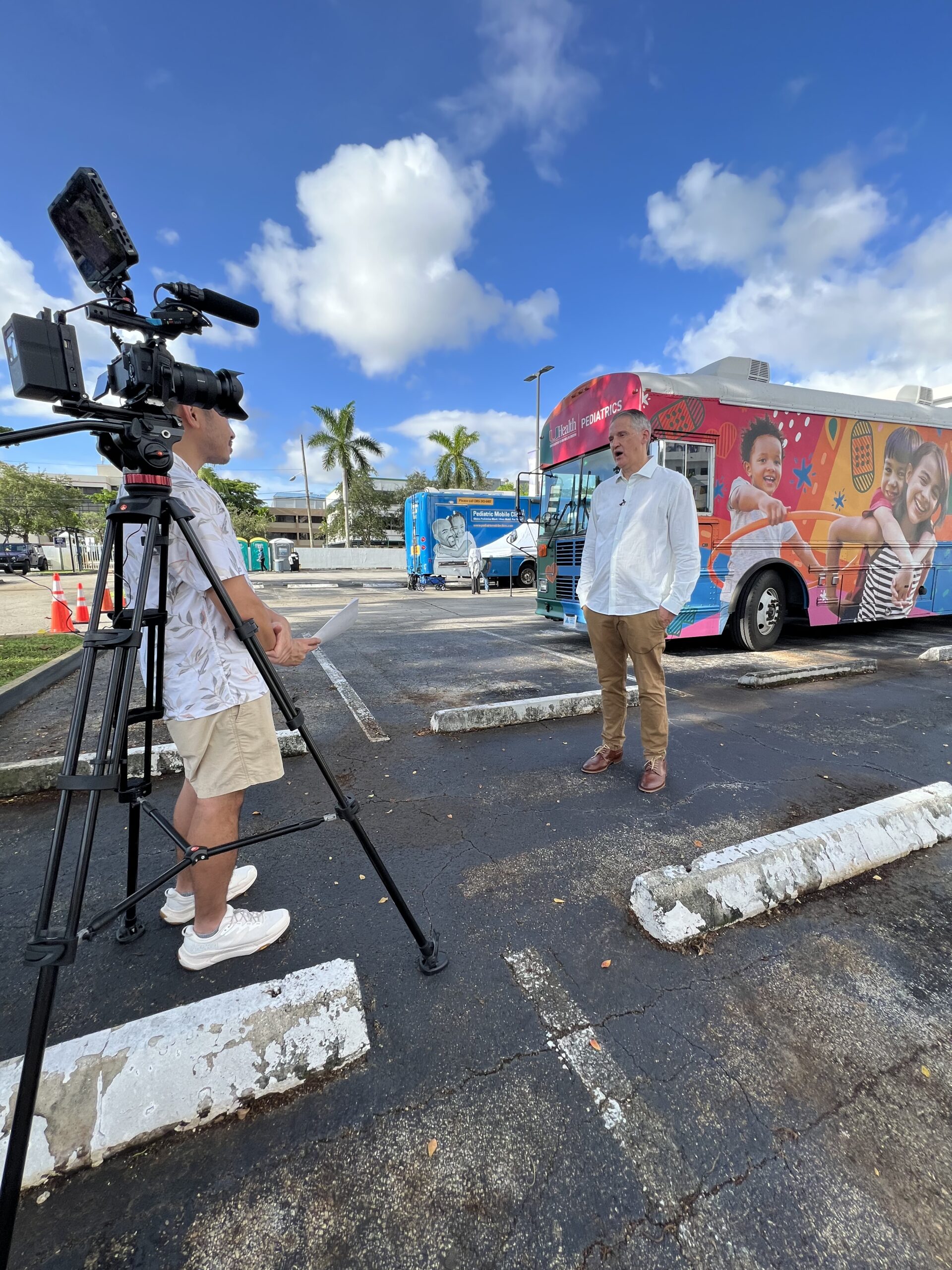
Credible voices, not another campaign

The AAMC represents the medical schools and teaching hospitals of the United States, so when it set out to talk to the public about vaccination, generic messaging was never going to cut it. What moves people is not a logo or a slogan, it is a person they recognize as one of their own. The brief was to find those people and let them speak, across communities that do not usually see themselves reflected in a national health campaign.

So the plan was not to say the same thing louder. It was to say it in four different places, in four different voices, to four different audiences.

Four cities, four very different conversations

We traveled to New York City, Miami, Ohio, and Washington State, chosen because they are geographically and demographically distinct enough to tell genuinely different stories. In New York, a pediatrician worked through questions inside immigrant communities. In Miami, a multilingual nurse reached Spanish speaking families in their own language. In Ohio, a rural family physician sat with the specific concerns of a rural patient base. In Washington State, a public health official focused on younger adults. Same subject, four completely different rooms.

Letting the people carry the story

The series works because we stayed out of the way. Instead of scripting talking points, we filmed these healthcare workers doing what they already do, then built each story around real interviews, community outreach, vaccination clinics, and the families thanking the people who showed up for them. That is the difference between a video that informs and a video that lands. One tells you a fact, the other introduces you to someone you trust telling you the same thing.

What a series like this actually does

“Vaccine Voices” earned real engagement and shares across social platforms, picked up coverage in national and local outlets, and, more importantly, handed the AAMC a library of individual stories it could keep using long after the initial push. Because each location stands on its own, the series never had to be watched all at once to work. A single doctor’s story could go out wherever it was needed, on its own, and still land.

Why associations turn to healthcare video production

Associations like the AAMC carry a kind of credibility a brand can only wish for, but credibility only helps if it reaches people, and reaching people is a storytelling problem. Healthcare video production is how you take the trust an association has already earned and put a human face on it, which is exactly what public health messaging lives or dies on. “Vaccine Voices” is a template for that kind of work, find the real people already doing the job, and let them be the message.

See how we approach video production for associations and nonprofits, or our broader event videography page. Learn more about the AAMC.

Public health messaging only works when people believe the person delivering it, and that is precisely where healthcare video production earns its keep. By putting real clinicians on camera in the communities they already serve, the AAMC turned a national message into dozens of local conversations, each one carried by a face the audience had reason to trust. That is the whole idea.