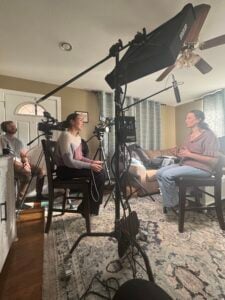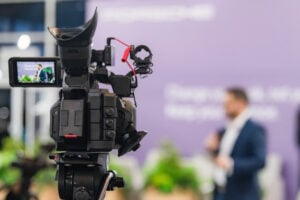
Picking a gala venue usually comes down to look and capacity. For filming it well, there’s a third question that matters just as much: does the space actually work for a camera, or does it just look good in person. Here are three real DC gala venues we’d point associations toward, and what to actually plan around at each one.
Table of Contents
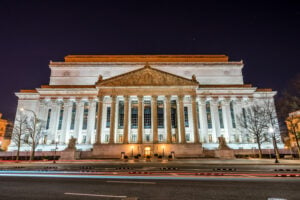
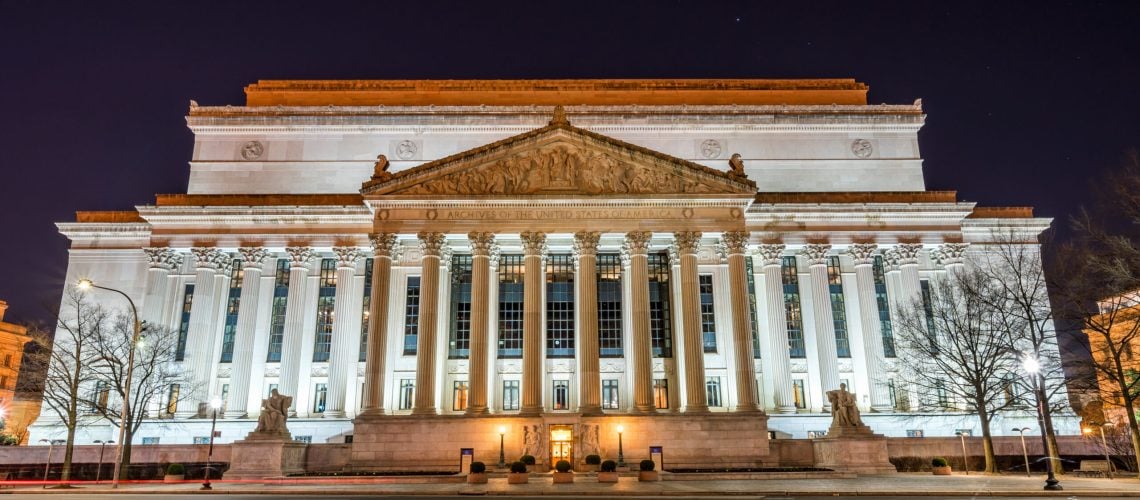
Andrew W. Mellon Auditorium
The Mellon seats 150 to 630 for a formal dinner and program, or up to 1,000 for a standing reception, inside a columned, marble hall built in the 1930s. The venue’s own site has current capacity and floor plan details. That scale and architecture photograph beautifully, but the same tall columns and high ceilings that make it striking also make natural light complicated, most of the room’s real light comes from fixtures, not windows, so plan your lighting setup around the room’s own character rather than assuming daylight will help you.
National Building Museum
The Great Hall’s 75-foot Corinthian columns make this one of the most dramatic rooms in DC, and it’s built to actually handle production, the venue advertises capacity for large-scale staging involving film, video, music, and lighting, with an on-site prep kitchen and an adjacent loading dock, per the museum’s own event information. That loading dock access is a real advantage for a crew, gear can come in close to the space itself rather than getting hauled across a building. At a capacity up to 2,000, though, audio is the real challenge, a room this large needs a real plan for sound, not just a single handheld mic.
Ronald Reagan Building and International Trade Center
The Reagan Building is built to flex between a formal trade symposium and an evening reception, which makes it a genuinely versatile option for an association balancing a conference and a gala in the same visit. Because it’s a working federal building, filming logistics deserve an early conversation with venue staff, the same way we’d recommend for the Walter E. Washington Convention Center nearby, since access and equipment approval work differently than at a private event space.
What actually matters for these DC gala venues on camera
Across all three, the pattern is the same. A room’s architecture sells the venue, but a crew needs to know the practical details before booking: where the light actually comes from, how sound behaves in a room built for reverberation and grandeur rather than clean audio, and how gear physically gets into the space. Ask the venue directly about load-in access and any restrictions on lighting or rigging before you assume a beautiful room will be simple to film in.
Planning your association’s gala in DC?
See how we approach event videography, or our video production for associations page. For a full conference rather than a single gala evening, see our conference videographer page.