When you edit a written document, you can quietly tighten a sentence or cut an entire paragraph and nobody’s the wiser. Video doesn’t work that way, especially interview footage. Cut mid-sentence and the speaker’s face jumps, their tone shifts, a word gets left hanging in the air. It’s not a small glitch, it breaks trust with the viewer instantly. The audience knows something got cut, and that shows up as a hit to the speaker’s credibility, not just an editing choice.
A successful corporate video is built on trust. An executive interview or a client testimonial is meant to build a connection with the viewer, and an awkward jump cut undermines that in a second. This is why we focus on a flawless, end to end process for every corporate video we produce, not just the technical fixes available in post.
The Real Fix Happens Before the Edit
Editing isn’t a magic fix for rambling dialogue. The real answer lives in pre-production and on the day itself. Great editing starts with great raw footage, and that comes down to how the interview is actually run.
Ask questions that prompt concise answers
The most effective way to avoid a rambling interview is to ask questions that naturally get a brief, direct answer. Instead of “tell us about your company culture,” a skilled interviewer asks “what’s the one core value that defines your company culture.” That forces the answer into a single, focused statement instead of five minutes of thinking out loud. This is a skill that separates a team that’s done this a hundred times from one that hasn’t.
Guide the interviewee to be succinct
Even with the best questions, a passionate or nervous interviewee can still ramble, and that’s where the interviewer’s job actually matters. Two things we use on set constantly. If someone’s gone off on a tangent, we’ll gently say, “that’s a great point, to bring it back to the original question, could you sum that up in one or two sentences?” It redirects them while still valuing what they said. The other move is asking directly for “the headline version” of what they just said, which puts the work of tightening it on them, and most people can do that with a little encouragement.
These techniques don’t just lead to better videos. They also make for a more comfortable, efficient experience for the executive or spokesperson being filmed. People appreciate the guidance and the respect for their time.
What a Strategic Editor Actually Adds
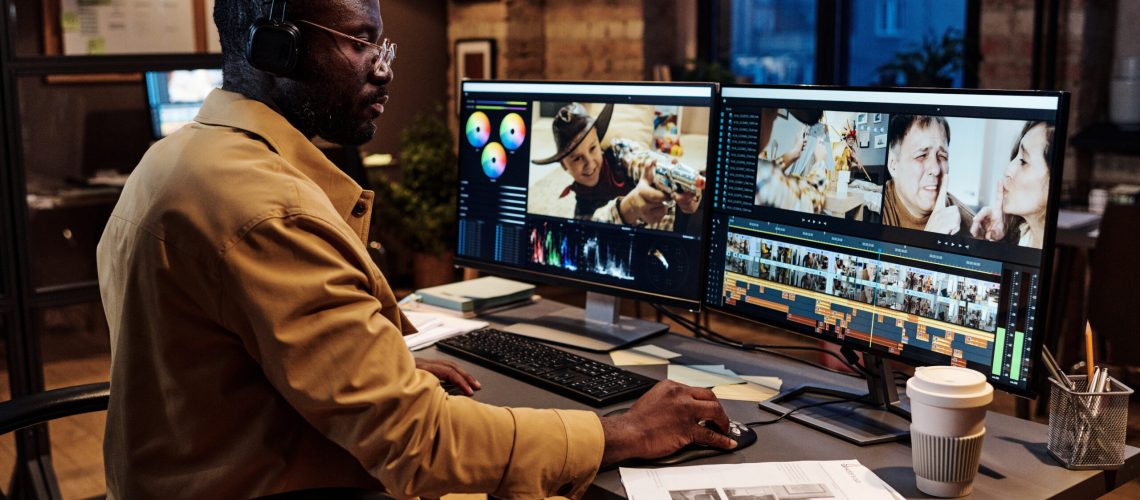
Good pre-production only gets you so far. The editor’s real job is weaving the material into a narrative, using B-roll, graphics, and music to bridge gaps and keep the story moving rather than just stitching soundbites together.
- B-roll: covering a natural pause or a breath with relevant footage of the office, product, or team, a technique called a J-cut or L-cut, smooths over minor imperfections without the viewer ever noticing a cut happened.
- Pacing: knowing when to hold on a shot for emotional weight and when to cut quickly to build energy is a rhythm, not a formula, and it’s the difference between a video that drags and one that holds attention.
- On-screen enhancement: text highlighting a key stat or a graphic illustrating a complex idea can turn a decent interview into something that actually communicates.
For a corporate executive or event planner in DC, that’s the real gap between an amateur recording and a video built to hold up under scrutiny. If your next video needs to represent your organization well, that attention to the cut is exactly where it starts.
Working on a video project in the DC area?
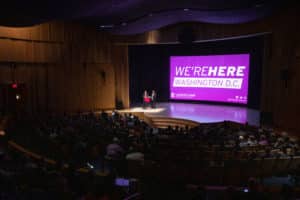
We handle event videography in Washington, DC for conferences, galas, and annual meetings, and we can turn a single day of coverage into months of content. See our event videography packages, or learn how we approach corporate video production for organizations across the DC metro area. Editing levels and what each one costs are listed on our pricing page.